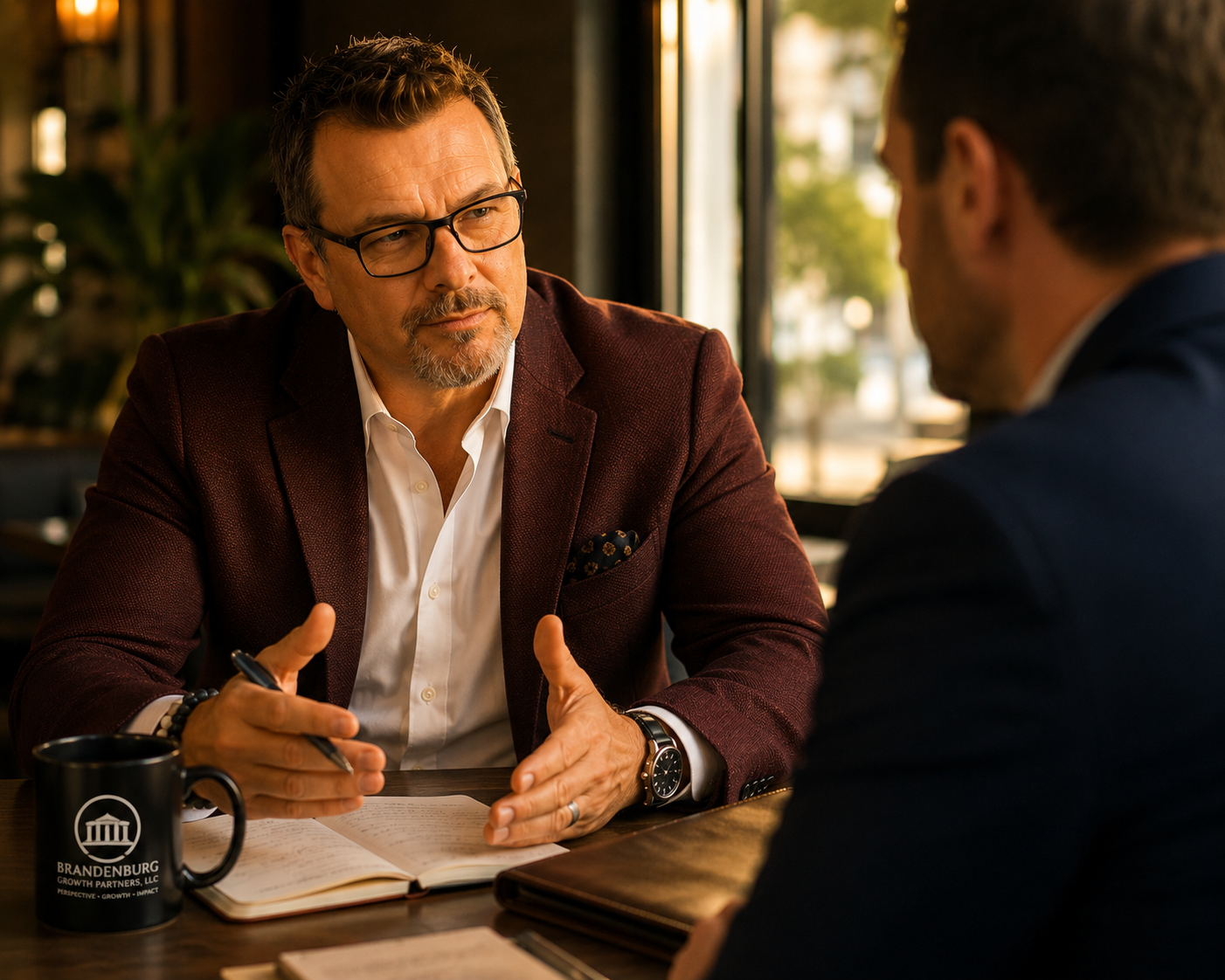
For founders, CEOs, and business owners preparing their organizations for the next stage of growth.
A founder often becomes the person everyone depends on. That can be a strength. When a business is young or moving through a difficult period, a founder’s direct involvement can provide speed, continuity, and a clear sense of direction.
But as the business grows, that strength can become a constraint. More decisions arrive. More people depend on the organization. The company needs leaders who can move work forward without waiting for the founder to weigh in on every important question.
Stepping back does not always mean leaving. It may mean changing how you lead while continuing to shape the company’s direction. It may mean preparing a successor, changing ownership, or eventually discovering who you are when running the business is no longer the center of your professional life.
The transition begins well before a departure date. It begins when the company needs a different kind of leadership, and the founder recognizes that the next stage requires a change in their own role.
The Company Must Grow Beyond One Person.
Founders tend to accumulate responsibilities gradually. They know the customers, remember why past decisions were made, and can often resolve a problem faster than anyone else. Over time, employees learn that bringing a question to the founder is the most reliable way to get an answer.
That habit can make the business feel efficient. It can also prevent the organization from developing the judgment and capability it needs to scale.
When pricing exceptions, hiring choices, customer commitments, and operational decisions all return to one person, the founder becomes a bottleneck, even when everyone is working hard. Decisions wait. Leaders hesitate. The company’s capacity remains tied to the founder’s available time and attention.
This creates practical limits. A business that depends heavily on its founder may struggle to grow without increasing that dependence. It may be less prepared for succession, and its enterprise value may be harder to sustain if important customer relationships, knowledge, and decisions live primarily with one person.
The question is not whether a founder should remain engaged. It is whether the business can keep performing when the founder is not involved in every decision.
Build Leaders Before You Need to Leave.
A founder’s first step back is often developing the leadership team around them. That work requires more than hiring capable people or changing titles. Leaders need meaningful responsibility, clear expectations, and the authority to make decisions within agreed boundaries.
In practice, this means looking at where decisions currently go and asking which of them should remain with the founder. Some choices may properly stay with the CEO or owner. Many others can move closer to the people responsible for the work, provided they understand the goals, risks, and limits of their authority.
Delegation is not simply assigning a task and waiting for a result. It is transferring enough context and decision-making power for another person to own the outcome. If a leader is responsible for a result but must seek approval for every consequential step, the founder has handed off work without handing off authority.
There may be a learning curve. A leader may make a decision the founder would not have made. That does not automatically mean the decision was wrong. The founder’s role is to set direction, explain the guardrails, offer feedback, and hold people accountable, not to quietly take back every decision that feels unfamiliar.

This is part of building the organizational capacity needed for growth. Strong executive leadership development helps leaders improve their judgment and effectiveness, while clear roles and accountability help the team turn that capability into consistent action. The founder gains room to focus on the decisions that genuinely require their perspective.
Make Succession a Business Process.
Succession is often treated as a future event: something to address when a founder is ready to retire, sell, or step away. In reality, succession readiness is built through everyday operating decisions. It develops when more than one person understands key relationships, when leadership responsibilities are clear, and when the organization can respond without relying on the founder to connect every piece.
Preparing a successor does not mean choosing one person and expecting them to become a copy of the founder. It means deciding what the business will require from its next leader, identifying the capabilities the organization needs, and giving potential successors opportunities to lead real work. Their performance can reveal where they are ready and where additional development is needed.
The process also needs open communication. A successor cannot gain the organization’s confidence if the founder continues to override their decisions or leaves everyone uncertain about who has authority. The board, leadership team, employees, and other stakeholders need to understand how responsibilities are changing and what the founder’s role will be during the transition.
Changes in ownership can add another layer. A founder may transfer ownership gradually, bring in partners, sell the business, or remain involved in a different capacity. Each path raises questions about decision authority, governance, timing, and the founder’s future contribution. Those questions are easier to work through when the organization is not trying to solve them in the middle of a rushed transition.

Good succession planning is not only about selecting the next leader. It is about helping the business maintain continuity while leadership and ownership evolve. Strategic advisory can provide an experienced outside perspective as leaders work through the choices, trade-offs, and organizational implications.
Change the Founder’s Role With Intention.
I have founded, built, and exited companies. I know what it is like to be the person others depend on, and I have experienced the professional transition that comes after leaving something I spent years building.
That experience taught me that stepping away from a role is not only an organizational change. It is personal, too. The work may have shaped your schedule, your relationships, and the way you understand your own contribution. Even when a transition is right for the business, it can take time to understand what comes next for you.
That does not mean a founder has to disappear from the company or stop caring about its future. It does mean being honest about the difference between adding value and remaining indispensable. A founder can continue to offer perspective, support leaders, or contribute to long-term direction without serving as the default answer to every operating question.
The adjustment can be difficult because the habits that made the founder effective in one stage may not serve the next stage as well. Letting other leaders take responsibility requires trust, patience, and a willingness to keep learning. It also means finding purpose beyond being the person who knows every answer.

Start With the Decisions That Still Return to You.
A founder does not need to redesign the entire organization to begin. Start by noticing which decisions repeatedly come back to you and why. Some may require your authority. Others may return because expectations are unclear, leaders lack information, or past attempts at delegation were not supported.
Look at the consequences as well as the decisions themselves. Where does work slow down while people wait for approval? Which customer relationships depend too much on your personal involvement? Where does the team hesitate because it is uncertain who owns the outcome? The answers can help you identify what to clarify, develop, document, or transfer.
Then choose a manageable area where another leader can take fuller ownership. Agree on the intended result, the decisions they can make, when they should involve you, and how you will review progress. Give the arrangement enough time to work. If something goes wrong, treat it as information about the expectations, support, or boundaries, not as automatic proof that the founder must resume control.
As the organization builds confidence, extend that responsibility. Over time, the company can become less dependent on the founder’s presence and more capable of handling complexity through its people, systems, and shared leadership.
A Different Kind of Leadership.
Stepping back is not a single decision. It is a transition in how the founder contributes and how the company operates. It asks the founder to develop leaders, transfer authority, prepare for succession, and consider what meaningful work looks like beyond running the business.
The business implications are tangible. A stronger leadership team can support scaling business strategies, improve succession readiness, and help build an organization whose value is carried by more than one person. Those outcomes take deliberate work. They also create room for the founder and the company to grow in different ways.
At Brandenburg Growth Partners, I work with founders and leadership teams navigating growth, succession, and organizational change. That may involve founder coaching and consulting, leadership development, or CEO advisory services. The right approach depends on what the business needs and what the founder is working through.
If you are beginning to consider what the company needs from you next, let’s start a conversation. I would welcome the opportunity to hear what you are navigating.