
Why a stronger economy doesn’t guarantee a stronger business
EXECUTIVE SUMMARY
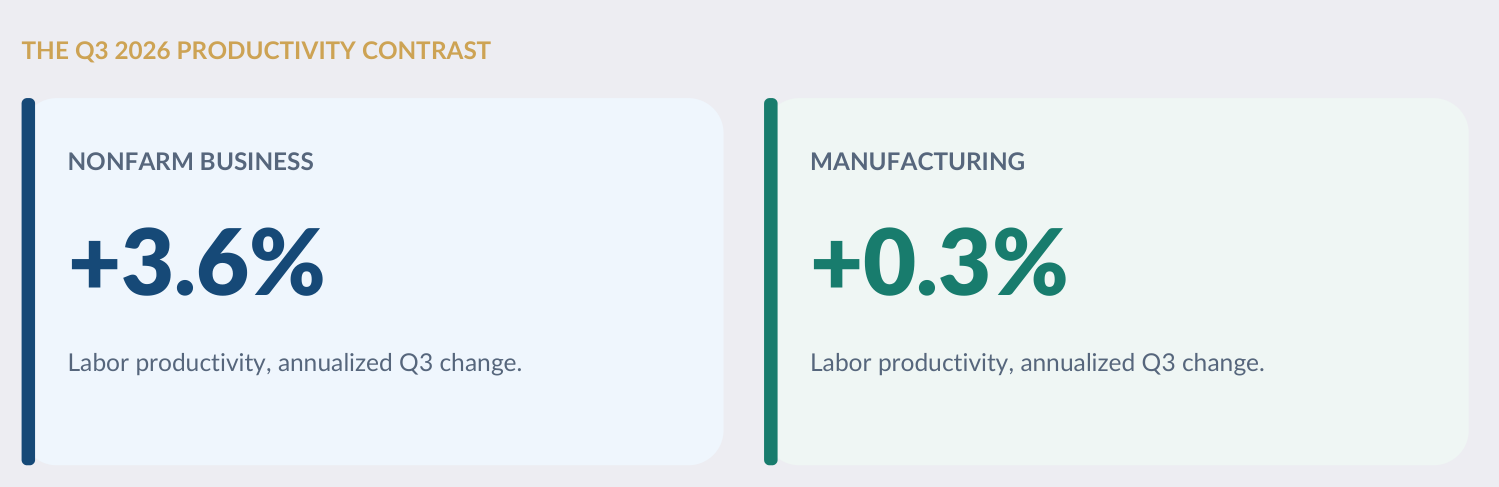
The latest economic reports offer genuine reasons for optimism. Hiring improved in October, and overall business productivity accelerated in the third quarter. But manufacturers reported little productivity improvement and rising unit labor costs. That difference deserves attention from CEOs entering the 2027 planning cycle.
National productivity is a useful economic signal. It cannot tell you whether your own business is gaining capacity, absorbing avoidable costs, or producing a better return on what you invest.
The Question for 2027
Are we becoming more productive, or simply adding resources to keep up?
01 | ECONOMIC SNAPSHOT
The numbers tell different stories
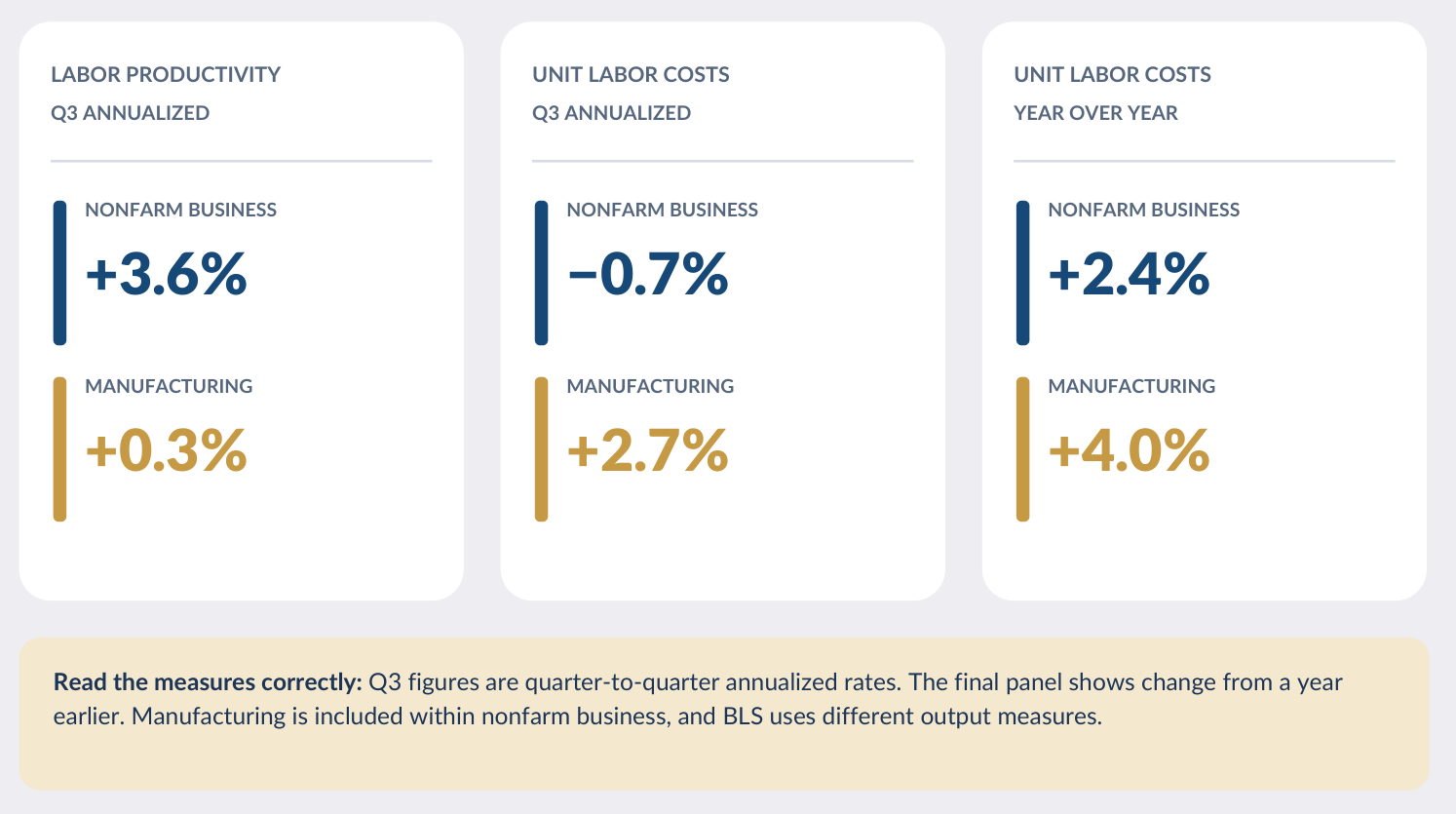
Quarterly improvements and annual cost pressure are both important to the operating outlook.
What the cost gap means
Nonfarm unit labor costs fell 0.7% at an annualized rate in Q3, while manufacturing unit labor costs rose 2.7%. Over the full year, the numbers remained higher in both categories: 2.4% for nonfarm businesses and 4.0% for manufacturing. A favorable quarter did not eliminate the cost pressures companies have experienced.
Hiring recovered, but not everywhere
October payrolls increased 165,000, and unemployment was 4.1%. Professional and business services added 70,000 jobs, while transportation and warehousing added about 25,000. The number of people working part time for economic reasons also rose by 339,000. The direction of hiring improved, but the labor market remains uneven.
02 | EXECUTIVE SIGNAL DASHBOARD
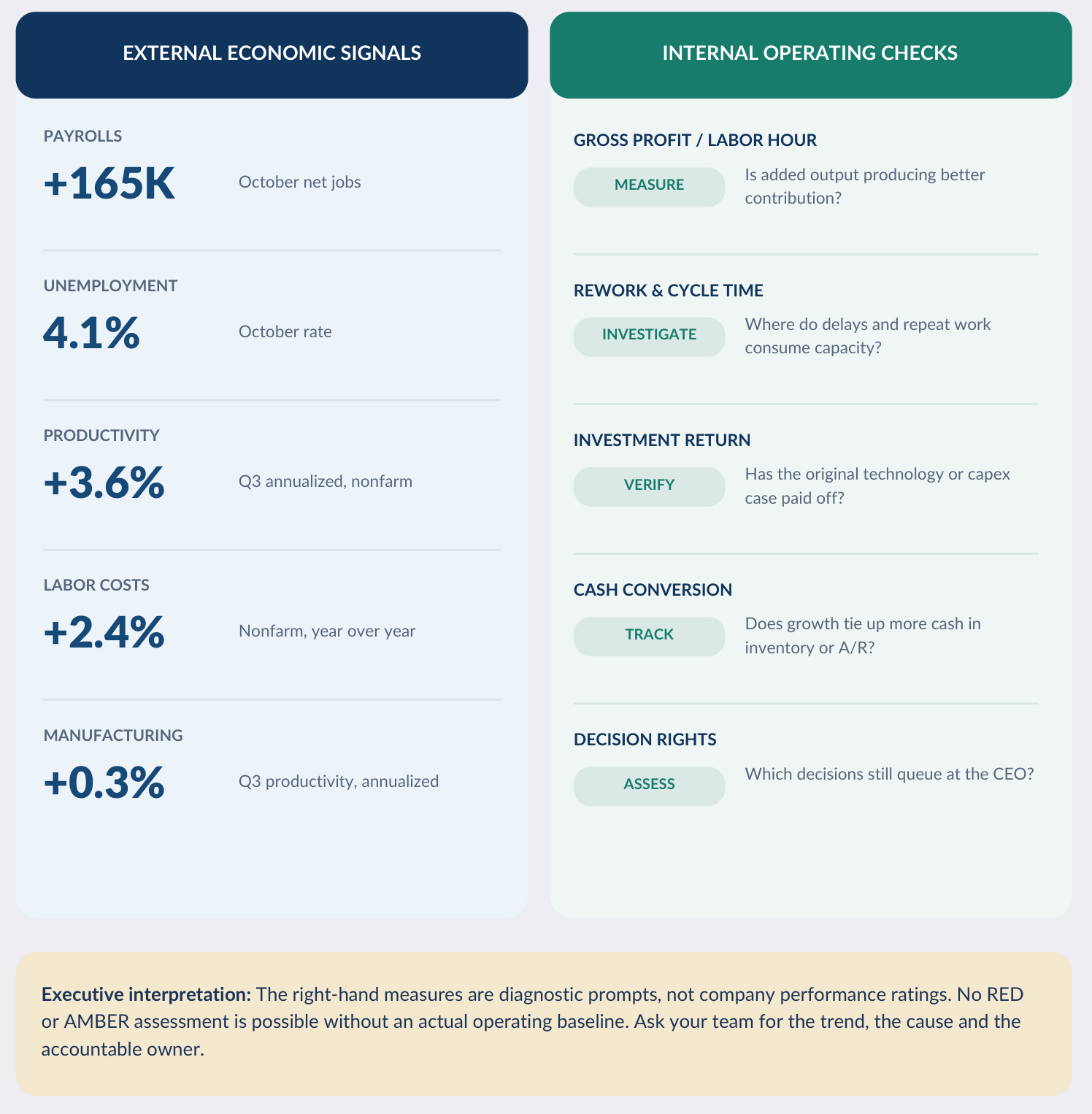
Two views of performance
External conditions on the left. The measures management can verify and influence on the right.
03 | LEADERSHIP INSIGHT
The Productivity Conversion Chain
A five-stage operating framework for turning process improvements into measurable value.
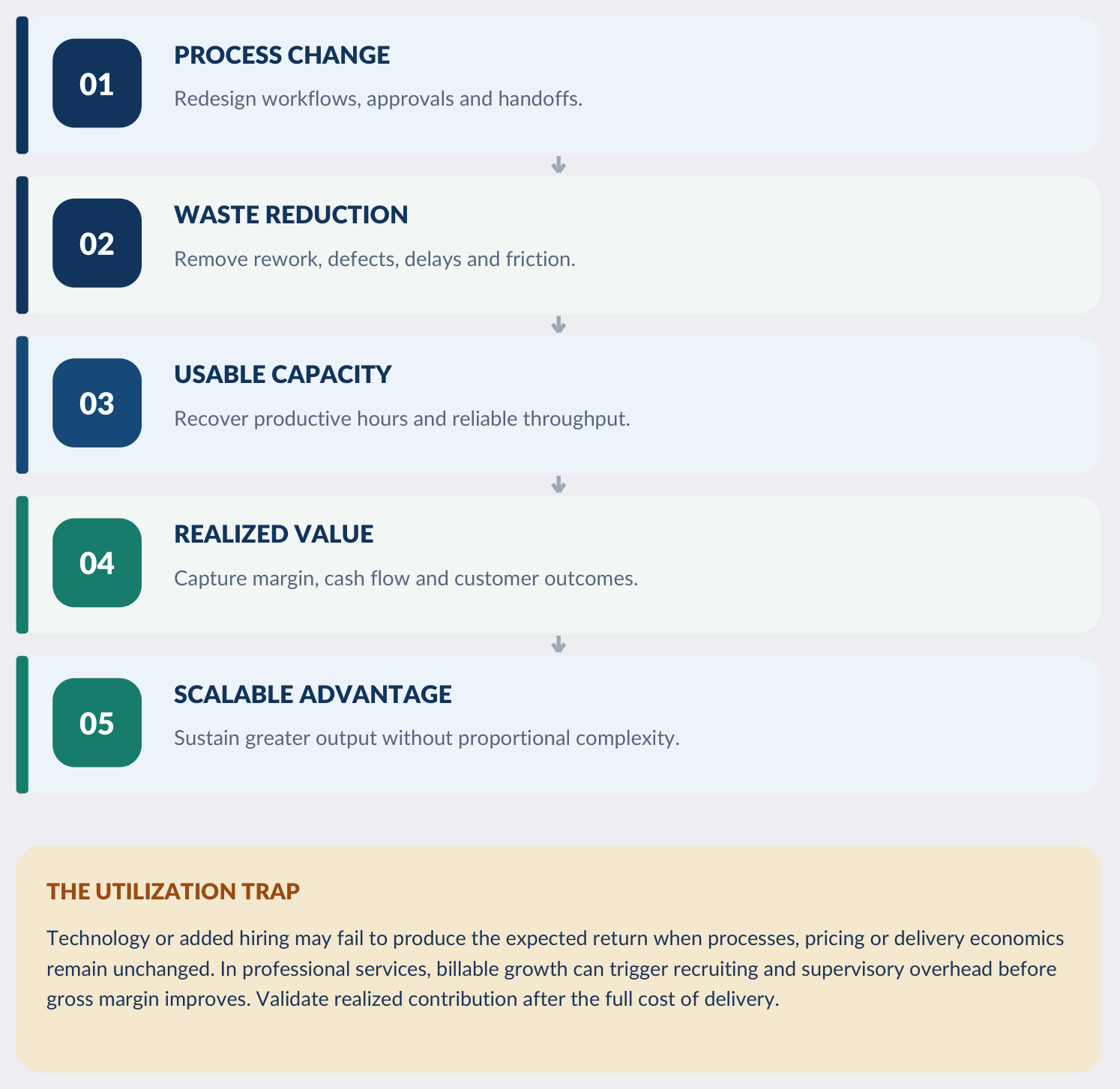
CEO check: Every stage needs a measurable baseline, an accountable owner and a clear definition of value.
04 | MARKET WATCH
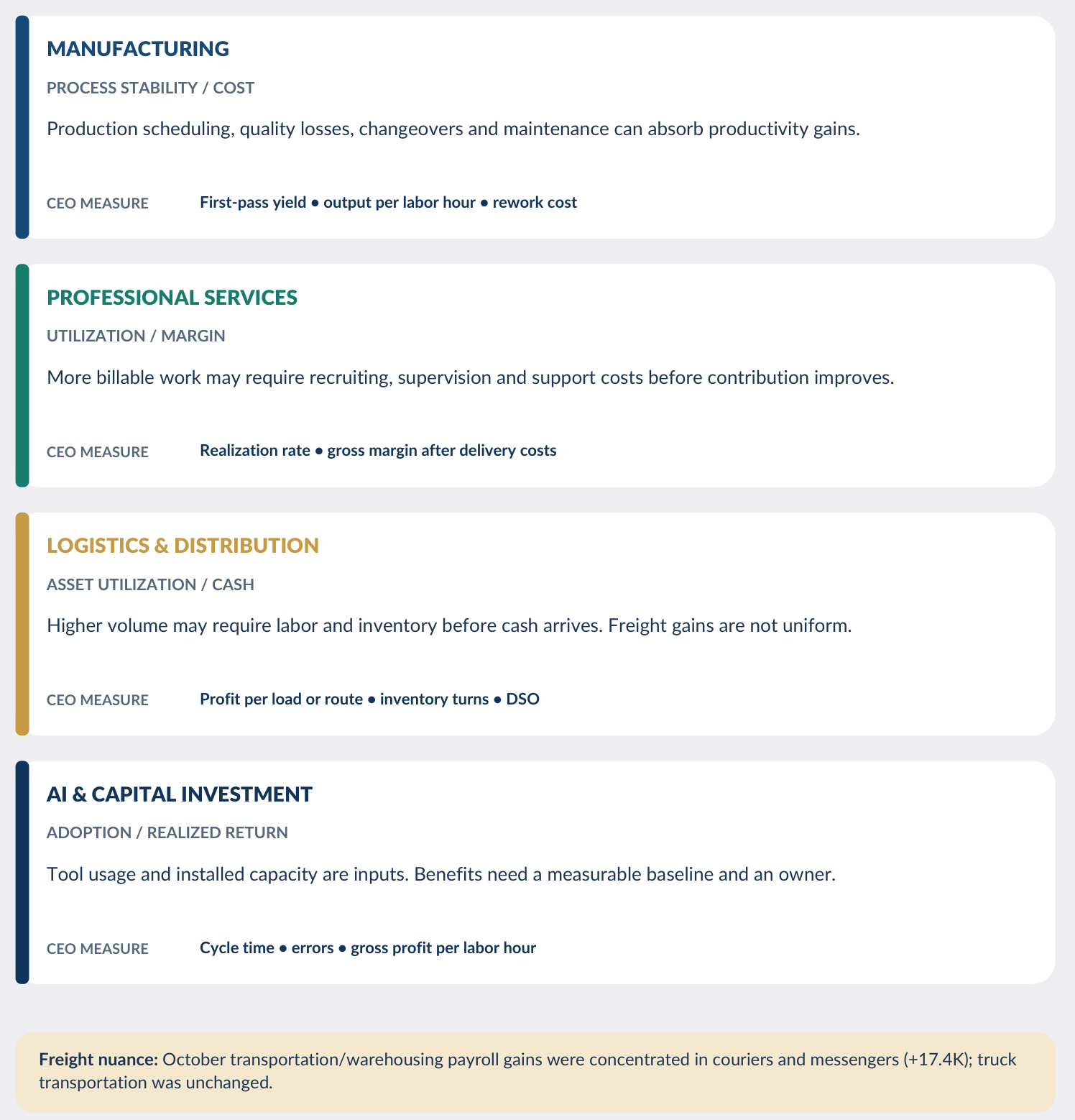
Where the divide shows up
Different sectors have different constraints. The operating measure should follow the actual economics.
05 | 2027 OPERATING REVIEW
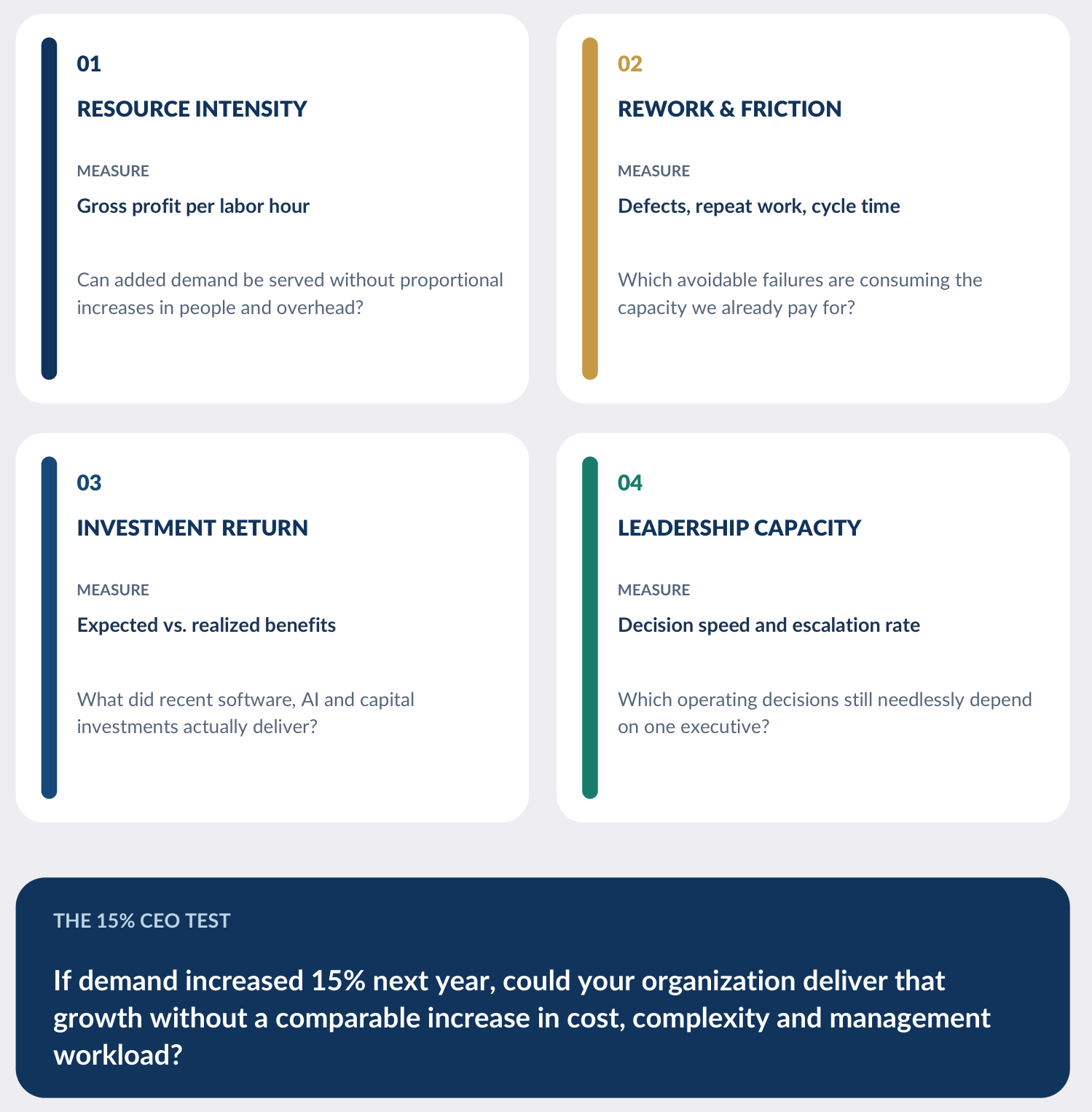
A scorecard for the 2027 plan
Four checks a CEO can request before committing to people, technology, equipment or expansion.
06 | CLOSING PERSPECTIVE & SOURCES
The decision belongs to leadership
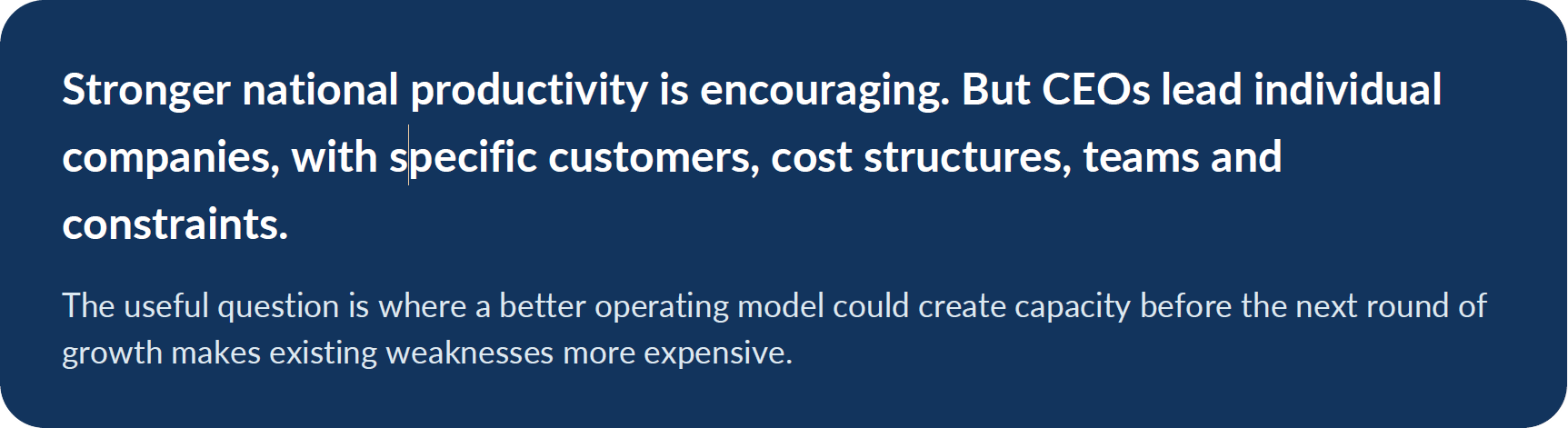
The latest reports give business leaders a reason to examine their assumptions. Hiring improved, but labor-market gains remain uneven. Overall productivity increased, yet manufacturers continued to face meaningful cost pressure.
The next planning cycle should connect those external signals to operating evidence: gross profit per labor hour, preventable rework, return on capital, inventory and receivables, and management decision capacity. Some businesses will need to add people and equipment. Others may find substantial capacity inside processes that no longer serve them well.
The objective is to understand the constraint, the investment needed to address it, and how the result will be measured. That is the work that gives a business the capacity to grow without allowing complexity to consume the gains.
Sean Brandenburg | Founder & CEO | Brandenburg Growth Partners
Sources & Methodology
U.S. Bureau of Labor Statistics. Productivity and Costs, Third Quarter 2026 (Preliminary), November 5, 2026. https://www.bls.gov/news.release/archives/prod2_11052026.htm
U.S. Bureau of Labor Statistics. Employment Situation, October 2026, November 6, 2026. https://www.bls.gov/news.release/archives/empsit_11062026.htm
Research cutoff: November 6, 2026. Preliminary data may be revised. BLS measures and their comparability limitations are identified in the economic snapshot. Internal measures, sector examples and executive recommendations are BGP editorial interpretation.
